The majority of patients research your practice online before booking an appointment. That includes scrolling through your social media feeds.
Social media in dentistry isn't just about posting pretty smile photos anymore. It's become the primary way patients decide if they trust you enough to sit in your chair.
This guide shows you exactly how to use social media to grow your practice, keep patients coming back, and stand out from every other dentist in your area.
We have been working with Justin, the DentalMarketingGuy. They have a good grasp on various dental office marketing strategies such as SEO and Google Ads. They have helped us refine our keyword targeting, optimize our ad spend, and improve our website ranking across key search terms. This has resulted in increased organic traffic, higher conversion rates, and a stronger online presence overall and consistent quality leads. They are quick to respond and their communication is excellent. We highly recommend them as partner if you are looking to grow your dental practice.
Your patients are already on Facebook, Instagram, and TikTok. The question is: are you there with them?
Here's what the data tells us. Practices that actively engage on social media see significantly more patient inquiries compared to those using traditional methods alone.
That's not a small difference. That's the gap between a full schedule and empty chairs.
Think about the last time you tried a new restaurant. You probably checked their Instagram first, right?
Dental patients do the same thing. They look at your social media posts, read your patient testimonials, and check out your dental office vibe before picking up the phone.
Research shows that patients changing dental practice often consult social media sites before making their decision. Your strong online presence directly impacts your bottom line.
Here's something most dental professionals don't realize. Social media marketing is more cost-effective than traditional advertising methods like mailers or billboards.
But it's not just about saving money. It's about building real relationships with patients before they even walk through your door.
Regular interaction through comments and personal messages creates a community atmosphere. This leads to higher patient retention rates and improved dentist patient communication.

Let's break down what social media in dentistry actually does for your practice.
Increased patient acquisition is the most obvious benefit. But here's what makes it work.
Studies published in BMC Oral Health and J Med Internet Res show that social media usage among younger dental practitioners and patients is growing rapidly. If you're not active online, you're invisible to an entire generation of potential patients.
Popular social networks worldwide allow dental practices to connect with diverse audiences and share educational content. You can reach people who would never see your Yellow Pages ad (does anyone use those anymore?).
Social media engagement keeps your practice top-of-mind. When someone needs a dentist, they think of the practice they follow online.
US dental practices use social media to post regularly about oral health education, behind-the-scenes content, and patient success stories. This creates stronger patient loyalty and improves patient compliance with treatment recommendations.
Social media enhances online presence by allowing dentists to share informative and relatable content. When you consistently share valuable oral health information, you become the trusted local authority.
This matters because patients want to see health care providers they trust. Patient education through social media helps demystify dental care and positions your practice as the go-to expert in your local community.
Justin is fantastic. I've worked with him in the past and he's been able to help me with a few issues I had with my web site (built by someone else.) Very quick to respond and easy to work with, and he knows this industry probably better than anyone else I've ever met. I'm looking forward to my new site with him.
Despite relatively few studies on this topic, the available scientific research provides valuable insights into social media's impact on dental practices.
A cross sectional study examining social media usage found that younger dental professionals are significantly more likely to use social media compared to older practitioners. This generational shift affects how practices should approach their marketing efforts.
Data from web based questionnaire study research shows that a significant percentage of patients who changed dental practices consulted social media before making their decision. The numbers don't lie.
Facebook, with its monthly active users exceeding 2 billion, remains the dominant platform for dental practice marketing. But Instagram and TikTok are quickly becoming essential for reaching younger demographics interested in dental aesthetics and cosmetic procedures.
You don't need to be everywhere. Focus on the platforms where your ideal patients actually spend time.
Facebook is a prime venue for dental practices to engage potential and existing patients, especially among mature audiences. If you serve families and adults over 35, your Facebook page needs to be your priority.
Health care professionals and public health professionals already use Facebook for professional networking and sharing dental news. Your colleagues are there sharing best practices and building their dental brand.
Instagram is particularly powerful for attracting a younger audience interested in dental aesthetics and procedures. If you offer teeth whitening, veneers, or Invisalign, Instagram is essential.
Focus on visual content. Before and after photos (with proper consent), short videos explaining procedures, and glimpses of your office culture work best for social media engagement.
TikTok provides an innovative platform for dental practices to engage with younger demographics through dynamic and entertaining content. Yes, really.
Short-form videos are used to showcase office culture, introduce staff, and explain procedures. A 30-second video about why flossing matters or how to handle dental pain can reach thousands of prospective patients.
You don't need to do dance trends (unless you want to). Educational content presented in a fun, approachable way performs incredibly well.
Most dental practices post randomly and wonder why nothing happens. Here's the formula that works.
A balanced social media content feed should consist of four types of content: educational, practice culture, social proof, and promotional.
Here's the breakdown:
Patients often look for educational content on social media when considering dental care options. Answer their questions before they ask.
Share oral hygiene tips. Post myth-busting content about common dental fears. Create quick videos explaining what happens during a root canal or how pediatric dentists approach children differently.
This type of content positions you as a helpful expert, not just someone trying to sell dental services. It also supports dental education in your community.
Here's a truth bomb: authentic patient-generated content is preferred over polished stock photos in social media marketing.
People want to see real patients, real results, and real team members. The overly perfect stock photo aesthetic actually hurts trust.
Show your actual dental office. Introduce your real dental team. Share genuine patient feedback (with permission). This authenticity converts browsers into patients and strengthens your dental brand.
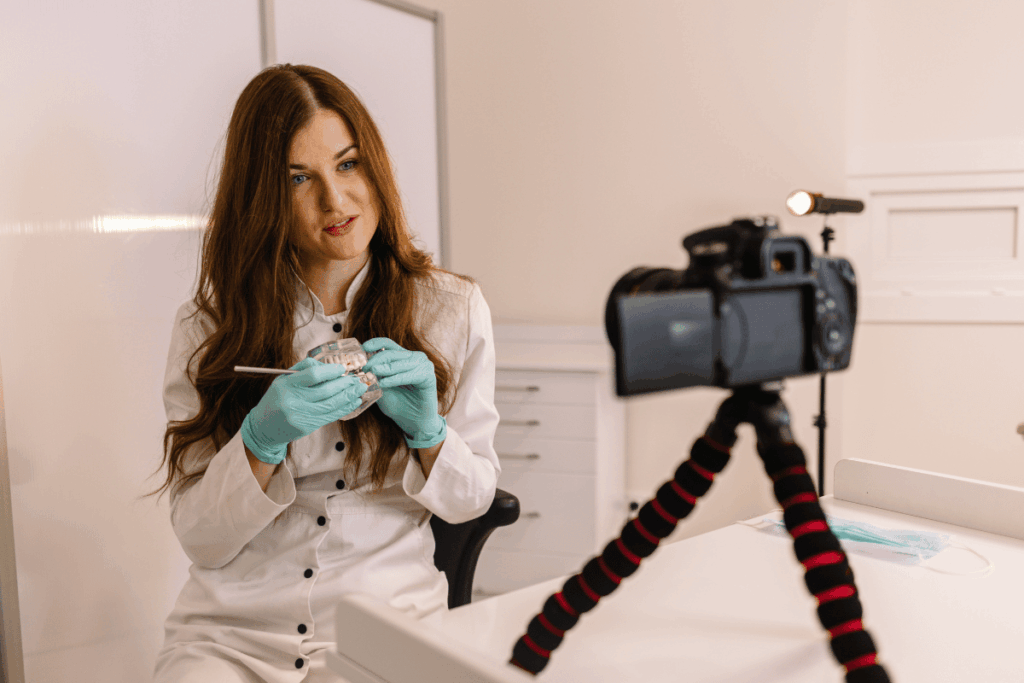
Video content is particularly effective on platforms like Instagram and TikTok for engaging with patients and showcasing dental procedures.
You don't need expensive equipment. Your smartphone works perfectly. Just hit record and explain something useful.
Short procedural videos, team introductions, and Q&A sessions get the most engagement. Live Q&A sessions can be hosted to answer patient concerns about treatments in real time.
Posting content is only half the battle. Engaging directly with patients through social media fosters trust and can turn digital engagement into real-world patient relationships.
Promptly responding to patient comments and personal messages demonstrates you value patient input. This seems obvious, but most dental practices ignore their social media messages.
Set up notifications. Check your messages daily. When someone asks about treatment costs or available appointments, respond within 24 hours.
This direct interaction reduces dental anxiety and builds trust before patients even visit your practice. Good dentist patient communication starts online.
Social media allows dental practices to address common patient questions and concerns through interactive formats.
Run polls asking what topics patients want to learn about. Host live streams where you answer questions in real time. Create contests that encourage patients to share their best smile.
Community engagement can involve hosting Q&A sessions, live streams, polls, and running contests. This two-way communication is what separates successful social media strategy from just broadcasting.
Addressing negative online reviews on social media can enhance your dental practice's reputation and credibility. Don't delete negative comments unless they violate platform rules.
Respond professionally. Acknowledge concerns. Offer to resolve issues privately. Other people watching see how you handle problems, and that builds more trust than perfect five-star reviews. It's all crucial to online reputation management.
Patient feedback, even when negative, provides valuable insights into how you can improve your practice and marketing efforts.
Once you've mastered the basics of social media in dentistry, these advanced tactics will accelerate your growth.
Social media is particularly effective for promoting elective treatments, often yielding strong returns on investment for targeted ads when properly executed.
Use hyper-local targeting in your paid ads strategy to reach specific geographic audiences. Target people within 5-10 miles of your dental office who are interested in cosmetic dentistry, dental implants, or orthodontic treatment.
Facebook and Instagram ads let you target by location, age, interests, and behaviors. A $200 ad spend can bring in multiple high-value patients to your practice.
Local SEO improvements can be achieved through social signals and engagement on social media platforms. When people engage with your social media posts, it tells Google your practice is relevant and active. Need help? Our dental SEO services set you up for success.
Increased activity on social media can improve your practice's ranking in local search results. Of course, social signals work best when paired with a professionally designed website that's optimized for conversions. This means more people find you when searching "dentist near me."
Tag your location in every post. Use local hashtags. Encourage patients to check in at your practice on Facebook. This helps you stand out among local businesses competing for the same patients.
Social media isn't just for patient acquisition. Professional networking through platforms like LinkedIn helps you connect with other dental professionals, dental students, and health care providers.
Share dental news and research findings. Discuss career development opportunities. Provide professional advice to colleagues just starting out.
This positions you as a thought leader in your field and can lead to referral partnerships with other practices, including pediatric dentists and specialists.
Monitoring and understanding analytics is crucial for dental practices to tailor their social media content effectively. Health informatics tools built into social media platforms provide valuable insights.
Check your insights weekly. What posts got the most engagement? What times did your audience interact most? Which content drove the most website clicks?
Double down on what works. Stop doing what doesn't. This data-driven approach separates growing practices from stagnant ones.
Before you post anything, understand these critical rules.
Dental practices should maintain a regular posting schedule and strictly follow HIPAA regulations regarding patient privacy.
Never post patient information without written consent. Don't share treatment details that could identify someone. No names in comments unless patients explicitly agree.
Strict consent protocols should be followed before posting patient photos or names on social media. Get it in writing.
Every member of your dental team needs clear guidelines about what can and cannot be shared online.
Your policy should cover patient privacy, appropriate content, who can post on behalf of the practice, and how to handle negative comments.
This protects your practice legally and ensures your social media presence remains professional.
The biggest objection I hear from dentists: "I don't have time for this."
You're right. You probably don't have time to manage multiple platforms, create content daily, and respond to every comment while running a successful dental practice.
Here are your options:
Using a content calendar can help dental practices manage their social media efforts more effectively. Plan your content monthly.
Batch-create content. Spend two hours one day per month recording videos and taking photos. Schedule everything in advance using free tools like Meta Business Suite.
Digital marketing strategy for dental practices is a real profession. Many dental practices hire specialists to manage their social media marketing while they focus on patient care.
If social media feels overwhelming, invest in professional help. The return on investment from consistent, strategic social media presence far exceeds the cost of outsourcing your marketing efforts.
You don't need to master every platform immediately. Choose one platform. Post three times per week. Engage with comments daily.
Maintaining a consistent online presence on social media is crucial for dental practices to engage effectively with their audience. Consistency beats perfection every time.
Here's what happens if you put off building your social media presence.
Your competitors are already connecting with your future patients. They're building trust, answering questions, and filling their schedules with people who could have been your patients.
In 2026, social media is considered an essential tool for dental practices to build trust and acquire new patients. It's no longer optional for health care professionals who want to grow.
Every month you wait is another month of missed opportunities. More importantly, it's harder to catch up once you're behind.
The good news? You can start today. One profile. One post. One patient interaction at a time.
Social media in dentistry isn't about going viral or becoming an influencer. It's about being present where your patients are, providing value, and building relationships that turn into loyal patients.
Ready to stop losing patients to practices with better social media? Let's build your strategy.
Social media in dentistry serves multiple critical roles for modern dental practices. It increases patient acquisition by making your practice visible to people actively searching for dental services online.
Social media enhances patient engagement and retention through regular interaction and educational content. It establishes your practice as a trusted local authority when you consistently share valuable oral health information.
Social media also provides cost-effective marketing compared to traditional methods like print ads or mailers. Most importantly, it builds trust before patients ever visit your office. When prospective patients see real testimonials, educational content, and authentic glimpses of your practice culture, they feel more comfortable choosing you as their dentist.
Research published in journals like BMC Oral Health and J Med Internet Res shows that social media significantly influences patients changing dental practice, making it essential for modern dental marketing.
Absolutely yes. A social media policy is essential for protecting your practice legally and maintaining professional standards online. Your policy should clearly outline HIPAA compliance requirements, including strict consent protocols before posting patient photos or names on social media sites.
It should specify who on your dental team can post on behalf of the practice and what types of content are appropriate. The policy needs to address how to handle negative comments and online reviews professionally and what patient information can never be shared.
Train your entire staff on this policy during onboarding and review it annually. This protects both your practice and your patients while ensuring your strong online presence remains professional and compliant with healthcare regulations.
The policy should also cover how team members handle personal messages from patients and when to provide professional advice versus directing patients to schedule appointments.
Start with one or two platforms maximum, then expand only after you've mastered those. Quality beats quantity every time in social media marketing.
Facebook is the best starting point for most dental practices because it reaches the broadest age range and works well for both general and cosmetic dentistry.
With billions of monthly active users, Facebook provides the largest potential reach among popular social networks worldwide. Add Instagram if you offer significant cosmetic services like veneers, whitening, or Invisalign since younger audiences interested in dental aesthetics prefer visual platforms.
Consider TikTok only after you're consistently posting on Facebook and Instagram. Managing multiple platforms poorly hurts your practice more than having a strong online presence on just one.
Focus on maintaining consistent social media engagement with valuable content on your chosen platforms rather than spreading yourself thin across every social network. Track your social media usage analytics to determine which platforms deliver the best return on your marketing efforts.